


Showing posts with label germany. Show all posts
Showing posts with label germany. Show all posts
BIPV PhotoVoltaic Glass
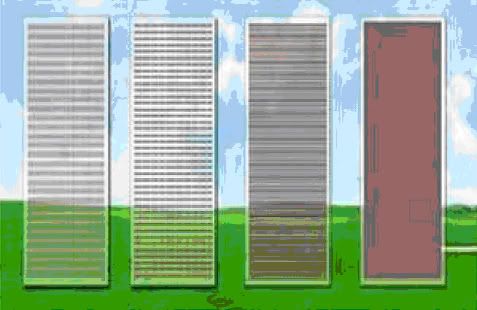
Aloha BIPV PhotoVoltaic Glass Wall
Our solar PV glass wall is made of the most advanced thin film cell produced in Germany, with over 20 years of life time, higher conversion efficiency, excellent weak light performance, provide more power and reliable quality assurance for construction.
Aloha full green thin film solar BIPV glass wall is produced relevant National construction material standards, totally match the installation form of traditional structural glass, and have option on multiple colors, could be applied extensively in structural curtain wall, skylight, sunshading board etc.
- National patent technicial products
- Dot mode setting Frame setting Implicit setting
- Higher strength, resist wind and strike, safer Sound insulation, heat insulation, effective
- Resistance to the outside environment intrusion
- Intelligent and personalized, regulating light, comfortable and convenient
- Environment-friendly, energy saving, no pollution
- Providing a new aesthetics decoration effect for modern construction
- Integrating multi function energy saving and cost reducing
- With variety of colors option
Aloha Septic Tank
algae,
cesspool,
collision,
domestic sewage,
germany,
rodent,
roto molding,
septic tank,
termite,
vibration

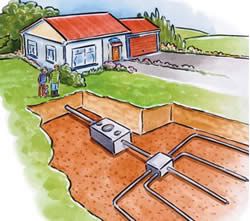
Features of Aloha Septic Tank
1. Material : Germany-Imported PE Raw Material; Guaranteed Long Life; Perfect for Algae Control, Easy Cleaning, Rodent and Termite Prevention.
2. Color : Dark Grey or Black
3. Wall Thickness : Uniform Throughout the Tank. Thickness and weight can be varied for extra strength requirements.
4. Structure : One-Piece Roto-Molding -- no welds or joints to fail.
5. Performance : Collision Resistant, Intensive Vibration Resistant,
6. Application : Septic tanks are mainly used for storing and disposing of domestic sewage. They are the best substitutes for traditional cement cesspool and fiberglass cesspool.
1. Material : Germany-Imported PE Raw Material; Guaranteed Long Life; Perfect for Algae Control, Easy Cleaning, Rodent and Termite Prevention.
2. Color : Dark Grey or Black
3. Wall Thickness : Uniform Throughout the Tank. Thickness and weight can be varied for extra strength requirements.
4. Structure : One-Piece Roto-Molding -- no welds or joints to fail.
5. Performance : Collision Resistant, Intensive Vibration Resistant,
6. Application : Septic tanks are mainly used for storing and disposing of domestic sewage. They are the best substitutes for traditional cement cesspool and fiberglass cesspool.
By using the multi-level combination of anaerobic treatment underground, it changed the quality condition of domestic sewage.


Quartier Vauban, Freiburg, Germany
baugruppen,
citizen participation,
city of freiburg,
germany,
learning while planning,
parking-free,
vauban
Quartier Vauban, Freiburg in Germany -- Widespread community involvement in the planning and development of the Vauban district has helped it to become a sustainable and flourishing neighbourhood.

Summary
Planning for the Vauban district started in 1993 and following three development phases, the project will be completed in 2006. The site (38 hectares) will be home to more than 5,000 inhabitants and 600 jobs. The main goal of the project is to create a city district in a co-operative and participatory way, meeting ecological, social, economic and cultural requirements.
The landowner, the City of Freiburg, is responsible for the planning and development of the site. This has been characterised by a 'Learning while Planning' principle allowing flexibility in reacting to development proposals and through extended citizen participation.
A major achievement by the City of Freiburg has been to divide land into small plots and allocate it in preference to private builders and Baugruppen (co-housing groups). Although the development plan included some regulations for the design and layout of the homes, a variety of structures exists and builders have had the freedom to design and develop the homes they aspire to. Coherence is provided through the extensive use of ecological measures and the 'car-free' and 'parking-free' concepts of living.
Perhaps the greatest strengths of the Vauban project are the ideas, creativity and commitment of the people involved and their common goal in creating a sustainable and flourishing neighbourhood.
Description of Project
Project Type - New planned suburb, Freiburg
Full Address - Vauban, Freiburg, Southwest Germany
Location Type - Former French barrack site
Number of Dwellings - Students Organisation (SUSI) - 596 dormitory rooms and
45 housing units
Phase 1 - 422 housing units of which: 233 private build (185 of the 233 in Baugruppen - co-housing groups), 36 by Genova Housing Association, 153 by development companies.
Phase 2 - approximately 645 housing units
Phase 3 - approximately 85 housing units
Dwelling type - Student dormitories / apartments / houses
Site Area - 38 hectares
Volume of Estimated Investments in Vauban - Approx EUR500,000,000
Summary
Planning for the Vauban district started in 1993 and following three development phases, the project will be completed in 2006. The site (38 hectares) will be home to more than 5,000 inhabitants and 600 jobs. The main goal of the project is to create a city district in a co-operative and participatory way, meeting ecological, social, economic and cultural requirements.
The landowner, the City of Freiburg, is responsible for the planning and development of the site. This has been characterised by a 'Learning while Planning' principle allowing flexibility in reacting to development proposals and through extended citizen participation.
A major achievement by the City of Freiburg has been to divide land into small plots and allocate it in preference to private builders and Baugruppen (co-housing groups). Although the development plan included some regulations for the design and layout of the homes, a variety of structures exists and builders have had the freedom to design and develop the homes they aspire to. Coherence is provided through the extensive use of ecological measures and the 'car-free' and 'parking-free' concepts of living.
Perhaps the greatest strengths of the Vauban project are the ideas, creativity and commitment of the people involved and their common goal in creating a sustainable and flourishing neighbourhood.
Description of Project
Project Type - New planned suburb, Freiburg
Full Address - Vauban, Freiburg, Southwest Germany
Location Type - Former French barrack site
Number of Dwellings - Students Organisation (SUSI) - 596 dormitory rooms and
45 housing units
Phase 1 - 422 housing units of which: 233 private build (185 of the 233 in Baugruppen - co-housing groups), 36 by Genova Housing Association, 153 by development companies.
Phase 2 - approximately 645 housing units
Phase 3 - approximately 85 housing units
Dwelling type - Student dormitories / apartments / houses
Site Area - 38 hectares
Volume of Estimated Investments in Vauban - Approx EUR500,000,000
Reference
1. http://www.forum-vauban.de/downloads/spezialwoea.pdf
2. http://www.forum-vauban.de/verkehrskonzept.shtml
3. http://www.vauban.de/karte/index.html
4. Rosenthal, Elizabeth. In German Suburb, Life Goes on Without Cars. The New York Times, May 11, 2009.
5. Archive of Forum Vauban, including back issues of "Vauban Actuel" newsletter
Next : Go to Introduction to Vauban, Freiburg
UK Housing Shortage
accommodation shortage,
germany,
japan,
John Egan,
pre-facbricated,
rethinking construction,
skilled construction workers,
ukraine


The Global Housing Shortage -- UK Case
With more of us opting to live alone or to buy second houses, the developed countries, for example, UK faces a severe accommodation shortage.
While the UK Government has announced plans for the construction of 200,000 new houses per year, with the UK accommodation industry currently under-producing by some 50,000 units each year, this target is unlikely to be met.
The decreasing number of skilled construction workers will also make the situation more acute: in 2001 the UK construction industry estimated it needed to train an extra 74,000 skilled workers every year for five years just to make up for the shortages of bricklayers, plumbers and electricians.
Could pre-fabricated accommodation be used to solve the accommodation shortage?
It was made clear by Sir John Egan in his 1998 “Rethinking Construction” report, that one solution to the accommodation shortage is pre-fabricated, factory built accommodation.
Offsite construction already features in the production of social accommodation: in 2005 one quarter of The accommodation Corporation’s estimated £1.4bn budget will be spent on the off-site manufacture of homes.
What is the UK construction industry doing to respond to this challenge?
Not enough: the construction industry has shown little inclination to change its attitude to innovative accommodation technologies such as prefabrication. At present, only relatively few units of prefabricated accommodation are produced in the UK, with the capacity limited to some 10,000 units per year.
Is accommodation constructed off-site in other countries?
Yes it is. Countries that have used off-site construction successfully include Germany, Japan and the United States. In Germany, nearly 15% of dwellings are now pre-fabricated while in the United States, over 400,000 factory built homes are constructed each year.


