



Showing posts with label sustainable housing design. Show all posts
Showing posts with label sustainable housing design. Show all posts
An Energy Efficient Design


Four objectives on energy efficiency should be achieved on a sustainable housing design :
1. It collects the sun’s heat that falls upon the building’s surfaces during the cold season;
2. It stores that heat so that it can be used during the night or during sunless days;
3. It distributes the stored heat throughout the house for comfort and energy efficiency;
4. It retains the heat in the building by reducing or eliminating usual sources of heat loss.
Ecological design to perform the above functions can be :
1. Active - relies on mechanical equipment (such as pumps, fans or photovoltaic cells) to collect and help transfer heat to storage;
2. Passive - relies on the parts of the building itself to perform the functions of heat collection, storage and distribution – often without mechanical means – thus considerably reducing cost and construction.
However, while heating may be an important aspect of sustainable house design in colder climates, in some climates, cooling may be just as important, if not more so.
A sustainable house should be designed in any climate to prevent overheating in summer, and there are numerous ways of accomplishing this, such as shading by trees or sun screens, ventilating the building interior, and orienting the building plan to cold breezes. Luckily, some equipment used for heating can also used for cooling, in ways that have largely been implemented in our house designs.
In temperate climates, from 20 to 50 percent of the annual heat for a home can be gained by heat from properly oriented and well-designed windows alone, with insulating controls.
An external greenhouse structure, such as a glassed-in porch or a sun room, is less expensive to build than a fully insulated structure, while also adding an additional area to the home that can be used as a garden (for growing vegetables), a socializing space around a pond, etc.).
In contrast to the passive approach, which relies on elements of building design and construction for natural control of climate, active systems use mechanical means (pumps, fans, automatic controls) to collect, store, and distribute heat and provide cooling to a home.
Local climate factors determine the amount of heating/cooling available, which in turn determines the appropriate equipment used to provide comfort for the house occupants.
In northern climates, for instance, fuel for domestic hot water requirements of a family of four, represent from 10% to 20% of the annual heating bill. The fuel savings that are possible with a solar domestic water heater can pay back the initial installation cost in such a climate, within a very few years.
In northern climates, heat from storage as low as 27C can provide comfort conditions. Usable heat could be stored for periods long enough to minimize backup heating needs, to the point that only a fireplace/stove or a small amount of electric heat would be the auxiliary heat required.
Passive, Active, or Both?
Yet, one should bear in mind that part of the task of creating comfort can be achieved without energy-consuming mechanical heating or cooling equipment, by responding to given climatic conditions in the design of the building shape, its orientation and materials, and that active systems are required only to take over during those periods when passive means are inadequate.
Furthermore, if passive means are first made part of the building construction, then solar collectors and any other mechanical heating or cooling equipment can be held to a size that is economically practical and does not “take over” the design of the house.
Introduction : Sustainable Housing
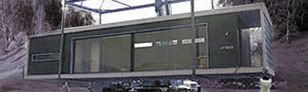

An Introduction to Sustainable Housing
Buying or building a house is, for most people, a major investment of money and time – often the largest investment that one makes in a lifetime. With careful design and planning, what otherwise would be an ordinary house-building project can become a rich and satisfying experience, which contributes to the life of the family much more than can be measured in monetary terms.
A eco-friendly or green home, in its relation to the land and the surrounding community, can embody our most profound feelings about living with nature and with society, and through the intelligence of the design, bring into form the ideals by which we hope to live. This site is dedicated to those who wish to bring these ideals into reality, no matter where they live on planet Earth!
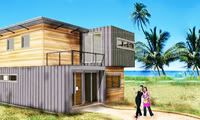
In the wake of perpetually increasing energy consumption and living cost all around the world, sustainability becomes an essential part of house design, as the proper planning and construction of the building itself can result in major energy savings.
The advantage of sustainable housing is one of construction economics. Sustainable systems are built of materials that can be easily obtained all over the world. The houses can be easily built by local contractors, as well as by relatively unskilled owner-builders.

Nevertheless, the decision to go sustainable today is also one made for the future – in purely economic terms, that of construction economics or to save fuel costs; in environmental terms, it is also to conserve limited resources.
The economic argument for sustainable housing is based upon the assumption that fuel costs will continue to rise, as they have in recent years, well above general inflation, and that water resources will become scarcer in time.
From the economic point of view, the investment in eco-friendly housing is justified if it pays back the added equipment installation cost by fuel cost savings within a reasonable period. From an environmental point of view alone, eco-housing is justified because it reduces our dependence on non-renewable, polluting fossil fuels.
From the environmental standpoint, the best sustainable design is therefore the one that saves the most renewable energy. However, in economic terms, the best sustainable design is the one which offers the highest return on the investment in equipment and construction.
As you shall see from our products, the Aloha Block module, featured on AlohaBlock.com, the sustainable approach most justified in economic terms varies according to climate, local fuel costs and the accuracy of assumptions made about eventual fuel cost rises, which in turn depend on local political and economic factors. In making judgments about the economic merit of eco-friendly housing, it should be kept in mind that many assumptions are involved so that the conclusions should not be taken as either absolute, or completely accurate.
Cost of sustainable installations vary according to local construction rates, the equipment used and the amount and type of financing available. For instance, a self-help builder who can contribute his own labor for a sustainable installation saves not only on construction labor, but contractor’s overhead percentage and the resulting finance charges, as well. In addition, a variety of tax incentives under constant revision by many legislatures worldwide, will make sustainable housing more economically attractive.
All things considered, to overcome these limitations, our eco-friendly Aloha Block module offered here are founded on a large variety of assumptions from all corners of the globe.