






Showing posts with label filter. Show all posts
Showing posts with label filter. Show all posts
Rain Harvesting System
filter,
flap valve,
gutter mesh,
harvesting,
insect proof screen,
monitor,
mosquitoes,
pump,
rainwater,
tank top up,
water diverter,
water tank
Aloha Rain Water Harvesting System -- the Complete Rain Water Collection Solution
Don't just fit a tank - install a complete system!
If you are considering purchasing a rainwater tank, we recommend installing a complete system to improve water quality and reduce tank maintenance.
With a little planning in advance, you can design and install a system that will not only give you good quality water, but will reduce your reliance on main water supply.
Rainwater that is captured and stored correctly is a safe, economical and sustainable source of quality water that can supply your water need for the whole family.
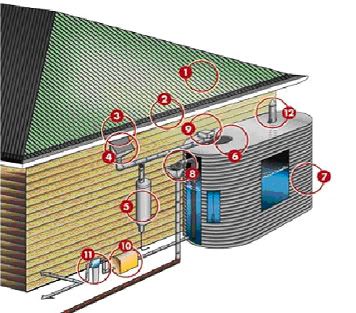
The following diagram shows the components that we recommend you to use to build your complete rain harvesting system.
Below please find the demonstration on the picture :
1. Check ROOF SURFACE is suitable for collecting quality rainwater.
2. Install GUTTER MESH to prevent leaves and debris from blocking gutters.
3. Fit GUTTER OUTLETS from the underside of the gutter to prevent obstruction of water flow.
4. Fit Leaf stopper RAIN HEADS to downpipes to stop gutters blocking. Rain heads deflect leaves and debris & keep mosquitoes out of pipes that hold water.
5. Install WATER DIVERTER/S to prevent the first flush of most contaminated rainwater from entering the tank.
6. Ensure the TANK SCREEN is installed at tank entry point to filter water and keep mosquitoes and pests out.
7. Choose a WATER TANK . Consider annual rainfall, roof catchment's area and water usage when determining its size.
8. Attach INSECT PROOF SCREENS or FLAP VALVES to the end of all pipes to the tank screen and to TANK OVERFLOW OUTLETS to keep mosquitoes and pests out and ensure tank is vented properly.
9. Utilise a TANK TOP UP system (if required) to automatically top-up the tank with mains water when water levels fall to a designated minimum level.
10. Select a PUMP SYSTEM to distribute water for use inside or outside the home.
11. RAINWATER FILTER . Fit a purpose designed rainwater filter after the pump to help reduce residual sediment, colour and odour.
12. WATER LEVEL MONITOR . Install a level indicator to help monitor your water usage. Wireless systems are most convenient and display a reading inside the home.
Don't just fit a tank - install a complete system!
If you are considering purchasing a rainwater tank, we recommend installing a complete system to improve water quality and reduce tank maintenance.
With a little planning in advance, you can design and install a system that will not only give you good quality water, but will reduce your reliance on main water supply.
Rainwater that is captured and stored correctly is a safe, economical and sustainable source of quality water that can supply your water need for the whole family.
The following diagram shows the components that we recommend you to use to build your complete rain harvesting system.
Below please find the demonstration on the picture :
1. Check ROOF SURFACE is suitable for collecting quality rainwater.
2. Install GUTTER MESH to prevent leaves and debris from blocking gutters.
3. Fit GUTTER OUTLETS from the underside of the gutter to prevent obstruction of water flow.
4. Fit Leaf stopper RAIN HEADS to downpipes to stop gutters blocking. Rain heads deflect leaves and debris & keep mosquitoes out of pipes that hold water.
5. Install WATER DIVERTER/S to prevent the first flush of most contaminated rainwater from entering the tank.
6. Ensure the TANK SCREEN is installed at tank entry point to filter water and keep mosquitoes and pests out.
7. Choose a WATER TANK . Consider annual rainfall, roof catchment's area and water usage when determining its size.
8. Attach INSECT PROOF SCREENS or FLAP VALVES to the end of all pipes to the tank screen and to TANK OVERFLOW OUTLETS to keep mosquitoes and pests out and ensure tank is vented properly.
9. Utilise a TANK TOP UP system (if required) to automatically top-up the tank with mains water when water levels fall to a designated minimum level.
10. Select a PUMP SYSTEM to distribute water for use inside or outside the home.
11. RAINWATER FILTER . Fit a purpose designed rainwater filter after the pump to help reduce residual sediment, colour and odour.
12. WATER LEVEL MONITOR . Install a level indicator to help monitor your water usage. Wireless systems are most convenient and display a reading inside the home.